

Getting Heat Right in Long Glass Tunnel Kilns
If you’ve ever worked with large glass sheets, you know the headache. It’s not about how much power you can throw at the glass—it’s about where that heat actually lands. When you’re running a tunnel kiln, “cold spots” are the enemy. One tiny dip in temperature over a long span and you’re looking at stress fractures. Not a great way to start the day. To fix this, we build custom infrared heating units that stretch past 2 meters.
The struggle with long tubes
Most IR lamps top out at 1 or 1.5 meters. That’s fine for small jobs, but for ultra-long glass, those gaps between the units become a liability. Every gap is a risk. By stretching the tubes longer, we basically create a solid curtain of heat. But you can’t just make a lamp longer and call it a day. You have to be smart about the voltage and wattage. A 2-meter lamp pulls a lot of current. If we don’t calibrate the wattage just right, the filament can actually sag under its own weight once it gets hot. When that happens, your radiation patterns go wonky, and you’re right back to square one with uneven heating.
Making it work in a continuous line
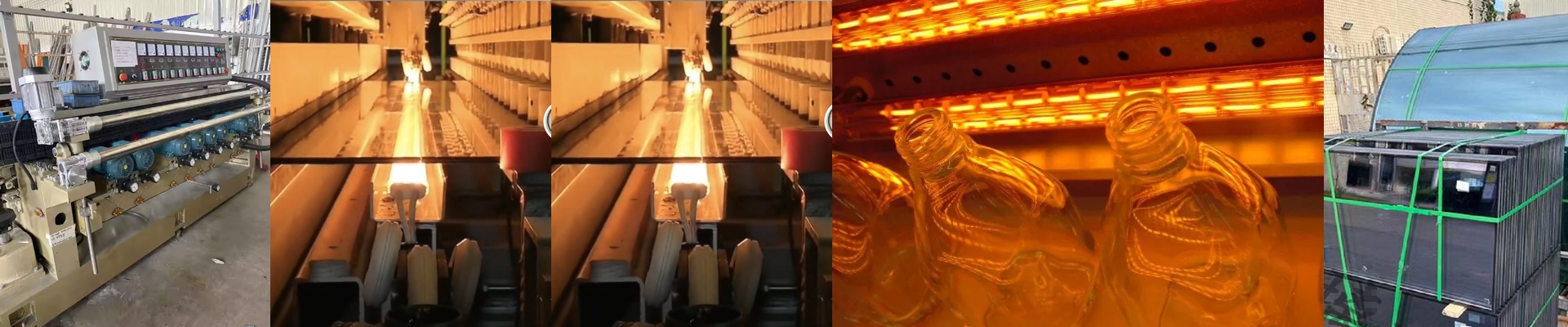
We set these up in a continuous layout. We’re talking precise overlaps and tight spacing so the glass sees a steady stream of energy without any interruptions. Because these spans are over 2000mm, the heat expansion is no joke. We use heavy-duty quartz glass that can take the stretch without snapping. And the wiring? It’s rugged. We use industrial connectors that can handle the constant “heat soak” of a tunnel kiln without burning out.
The trade-offs (The honest part)
Here’s the thing: longer lamps give you incredible heat density, but they’re fragile. A 2-meter tube is way more sensitive to vibrations or a stray bump than a short one. You’ve got to make sure your kiln racking is rock solid. Plus, these high-output units are power-hungry. You’ll need to check your transformers and contactors. If they aren’t spec’d for the extra amperage, they’ll fail early, and nobody wants to deal with a blown transformer in the middle of a production run.